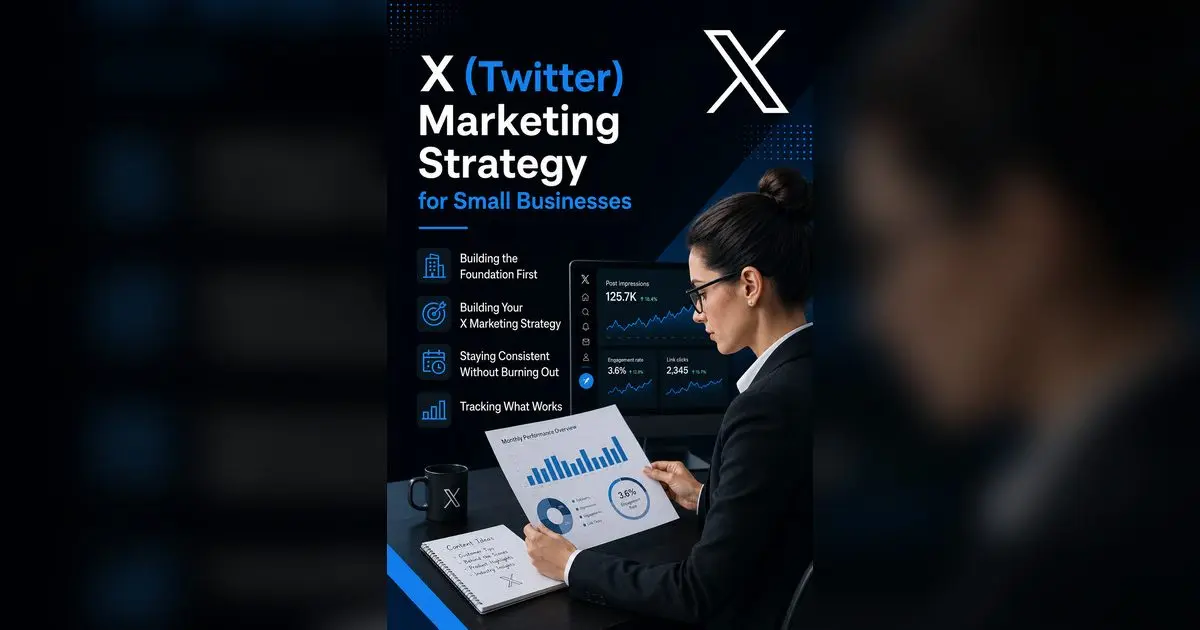
Twitter (X) Marketing Strategy for Small Businesses
Small businesses treat Twitter (X) marketing as something to get to eventually. They post when they remember, get minimal response, and quietly abandon their efforts. What tends to go unnoticed is that X has over 251 million monetisable daily active users and a significant portion of whom are active buyers, decision-makers, and people actively looking for what businesses like yours offer. The platform favours conversation and consistency over production budgets. For a small business owner working with limited resources, this is actually an advantage worth paying attention to.
This guide outlines a straightforward Twitter (X) marketing strategy you can put into practice today, even if your time is tight.
Why Twitter (X) Marketing Still Works for Small Businesses
X operates differently from most other social platforms. There is no pressure to produce polished visuals or amass a massive following before anyone notices you. Small accounts regularly outperform large brands simply by delivering useful content and engaging like a real person would.
The platform is built around real-time conversation. A well-timed post or a genuine reply to the right thread can reach thousands of people without any ad spends. For small businesses, this level of organic reach is something most other platforms stopped offering years ago.
That said, posting randomly and hoping for the best will not move the needle. What works is having a clear plan and sticking to it.
Building the Foundation First
1. Set Up a Profile That Works for You
Before writing your first post for Twitter (X) marketing, get your profile fully optimised. It functions as your digital storefront, and every element shapes how a visitor perceives your business before they read a single word you have written.
A few things to sort out before anything else:
- Use your logo or a clean photo as your profile picture
- Write a bio that clearly explains what you do and who you help in plain language
- Add your website link
- Pin your strongest post or current offer at the top
A well-put-together profile builds trust quickly. Do not skip this step thinking you will come back to it later.
2. Define Your Brand Voice Early
X audiences respond to accounts that sound like actual people, not press releases. You do not need to be witty or loud; you just need to be consistent. The tone on X can be more relaxed than on LinkedIn or Facebook, but it should still feel true to who your business actually is.
If your business is warm and approachable in person, carry that into your posts. If you run a more formal operation, it works too. What matters most is that your tone stays recognisable from one post to the next.
How to Build Your Twitter (X) Marketing Strategy

1. Know What You Are Working Toward
Posting without a clear goal in mind is just noise. Before developing a content plan, settle on what you actually want the platform to achieve for your business. A few common goals for small businesses include:
- Growing brand awareness in your local market or niche
- Driving traffic to your website or a specific landing page
- Starting conversations that lead to leads or sales
- Building a community around your product or service
Every content decision that comes next becomes easier to make once the goal is clear.
2. Plan Your Content Around Conversations
X is not a broadcast channel. It is built for back-and-forth, and accounts that engage through replies and mentions consistently reach a wider audience than those that only publish and disengage.
A few content formats that tend to work well for small businesses’ Twitter (X) marketing:
Threads: These work for going deeper on a topic. Walking through how your product solves a real problem, or sharing a behind-the-scenes story in a few connected posts, gives people a reason to read through and share. Threads offer more visibility and better storytelling than a standalone post ever will.
Polls: Low effort to create and genuinely useful for sparking interaction. Ask your audience something relevant to your industry or product. The replies often yield more insights than the poll results themselves.
Value posts: Short tips, quick lessons or practical advice related to what you do. These build credibility steadily over time as well as attract followers who are actually interested in your space.
Visual content: Photos and short videos consistently outperform text-only posts in engagement. You do not need a professional setup for this. Just clear yet relevant visuals are enough.
3. Use Hashtags the Right Way
Hashtags help people find your content. Still, overusing them makes posts look cluttered and spammy. One to two per post, focused on your industry or the specific conversation you want to join, works far better than stacking tags to chase visibility.
Trending hashtags can be helpful. However, they come in handy only if they make sense with what your business does. Jumping on a trend just because it is gaining traction doesn’t usually lead to genuine engagement.
Staying Consistent Without Burning Out
1. Post Regularly, But Do Not Overdo It
Consistency beats volume for Twitter (X) marketing. For most small businesses, one to three posts per day is a realistic as well as an effective range. It keeps your account active without demanding more time than you have.
A simple content calendar helps here. Block out time once a week to plan and schedule your posts in advance. This way, you are not scrambling every morning trying to think of something to say.
2. Engage More Than You Post
This is where most small businesses falter, and it is often the main reason growth stalls. Your replies can reach just as many people as your own posts, sometimes more. Spend time daily responding to mentions, joining conversations in your industry, and replying to posts from people in your target audience.
Dedicating 20 to 30 minutes each day for active engagement will do more for your visibility than doubling your post volume. When someone mentions your business or replies to something you shared, respond promptly. Getting back to people within a few hours shows there is a real person behind the account, which goes a long way in building the kind of trust that leads to follows and eventually sales.
Tracking What Works in Twitter (X) Marketing
1. Pay Attention to Your Analytics
You do not have to be a data expert to use analytics well. Checking your numbers once a month is enough to spot patterns. The metrics worth keeping an eye on include:
- Engagement rate across posts
- Follower growth over time
- Impressions and profile clicks
- Which content types are getting the most interaction
X’s native analytics let you review individual post performance, including clicks, replies, and reposts. Use this information to figure out what your audience actually responds to, then lean into more of it.
2. Look at What Competitors Are Doing for Twitter (X) marketing
Watching how similar businesses use the platform gives you useful reference points. Pay attention to how often they post, what topics they cover and how their audience engages. You are not copying anyone. You are gathering context to sharpen your own approach.
Final thoughts
X is not where overnight results happen. But for small businesses that show up consistently, engage like real people, and post with a clear purpose, it builds genuine momentum over time.
For Twitter (X) marketing, start with a clean profile, pick one or two clear goals, and build a simple content rhythm you can actually maintain. Lead with value and conversation rather than promotion- the engagement follows such an approach.
FAQs
1. How often should a small business post on X?
One to three times daily is a practical as well as an effective range for most small businesses’ Twitter (X) marketing strategy. Consistency matters more than volume. A consistent schedule keeps your brand in the public eye and signals to the algorithm that you are active over time.
2. Do hashtags still help with reach on X?
Yes, but use them selectively in Twitter (X) marketing. One to two relevant hashtags per post work better than loading every tweet with tags. Stick to hashtags tied directly to your industry or to conversations your target audience is already part of.
3. Is X marketing worth it without a big following?
Absolutely. X gives smaller accounts real organic reach, especially when they engage actively. Replying to posts, joining conversations and publishing genuinely useful content consistently can grow your visibility without needing an existing large audience to get started.