Why Swipeable Instagram Carousel Posts Posts Are Competing with Reels for Engagement in 2027
For the better part of a few years, Instagram Reels dominated social media conversations. Brands adjusted their content calendars and creators shifted resources toward video production for engagement.
Yet something interesting has happened in the background.
Instagram carousel posts have reclaimed a meaningful place in content strategies. They are showing up more frequently in feeds, generating strong save rates, and encouraging the kind of engagement that many businesses actually value. While Reels continue to play an important role, swipeable posts have quietly become one of the most reliable formats for educating audiences, building trust, and extending content lifespan.
It’s no longer about picking sides in the conversation. It is about understanding how each format contributes to visibility and audience engagement.
Why Instagram Carousel Posts Are Making a Comeback
The renewed popularity of carousels is not happening by accident.
Audience behavior has evolved. Social feeds become increasingly crowded with video content. Hence, many users are spending more time with posts that allow them to consume information at their own pace.
A carousel when designed well, can tell a story, explain a process, share data, present multiple examples or break down a complex topic into digestible slides. Rather than demanding immediate attention like a Reel, a carousel invites interaction.
The swipe itself becomes part of the experience.
For businesses, this creates opportunities to communicate ideas that may be difficult to cover in a 15 or 30 second video. Educational brands, consultants, agencies, coaches and B2B organizations have been particularly quick to capitalize on this shift. For creators using AI to make carousel posts significantly lower time, efforts and cost.
Instagram Carousels vs. Reels: Understanding Their Engagement Potential
The issue of which format (Instagram Carousels vs. Instagram Reels) is better than the other, is based upon the assumption that there can only be a single superior format.
In reality, they serve different purposes.
Reels are excellent tools for gaining attention. They can help a business get its name out there to people who might not have even known the business existed. The value of Reels is in their ability to reach and discover.
Carousels operate differently.
Instead of focusing on maximizing views (or impressions), users of this type of platform are typically looking for deep engagement. As a result, users of this type of platform will usually spend more time reading the content, viewing several “slides,” stopping to read individual items and returning to previously viewed content at a later date.
This distinction matters because reach and engagement are not identical metrics.
A Reel can get to thousands of people in a short amount of time. A carousel might not have as many views but it will create more significant connections between people that interact with it.
Why Swipeable Posts Encourage Meaningful Engagement
There is a psychological element behind the success of swipeable posts.
Every slide creates a small commitment. Once users engage with the first slide, curiosity often encourages them to continue.
The result is a longer interaction period than many static image posts receive.
Carousels also support a more structured narrative. Instead of presenting a single idea, they can progressively reveal information-
- A problem
- Supporting evidence
- Common mistakes
- Recommendations
- Actionable takeaways
By the final slide, users have invested time and attention in the content.
That investment frequently translates into stronger Instagram engagement signals.
The Role of Saves and Shares in Instagram Content Discovery
Likes remain visible and familiar, but saves and shares have become increasingly important indicators of content quality.
When someone saves a post, they’re signaling future intent. They intend to return to the content because it still has value.
The same principle applies to shares.
People share content that teaches, solves problems, explains concepts clearly, or provides useful insight for someone else.
This is where Instagram carousel engagement often stands out.
Educational carousels naturally encourage users to bookmark information and distribute it within their networks. A checklist, framework, industry insight, or tutorial can continue generating activity days or even weeks after publication.
That persistence gives carousels a longer shelf life than many other content formats.
7 Strategies to Create High-Performing Instagram Carousel Posts
Success with Instagram carousel posts rarely comes from design alone. Structure matters just as much.

– Have a Solid First Slide
The first slide should hook the audience straight away. Users should know in seconds why the content is worth a swipe.
– Focus on One Core Idea
Trying to cover too many topics weakens engagement.
The strongest carousels typically revolve around a single lesson, framework, question, or problem.
– Create Logical Slide Progression
Each slide should naturally lead into the next.
Readers should feel guided through the content rather than jumping between unrelated points.
– Keep Text Manageable
Dense slides often reduce completion rates.
Concise messaging usually performs better than attempting to fit an entire article onto each slide.
– Use Visual Consistency
Consistent typography, colors, and layout help create a smoother reading experience.
The Instagram carousel posts design should support the message rather than compete with it.
– Include a Shareable Insight
Readers are more likely to share content that helps them appear informed or helpful within their own networks.
– End With a Clear Next Step
The final slide may encourage saving, sharing, commenting, or visiting another resource.
Providing direction often increases engagement opportunities.
Types of Content Creators Should Explore with Instagram Carousel Posts
One reason Instagram carousel posts continue gaining relevance is their flexibility.
Several content types consistently perform well-
– Step-by-step tutorials
– Industry insights
– Myth-versus-fact content
– Case study breakdowns
– Before-and-after examples
– Frameworks and checklists
– Data-driven observations
– Customer success stories
In particular, for B2B businesses, using carousels is a great method of translating your knowledge and experience into a form of content that is easily consumed by your target audience.
They can educate without feeling overly promotional.
When Should You Choose Carousels Over Reels?
The answer depends on the objective.
When creating an introduction to a brand, or illustrating its personality, a Reel can be more effective than other options. In addition, Reels are a great way to show how someone would experience your product, and they provide the opportunity to increase the number of people who will see what you have created.
Instagram carousel posts tend to work better when the content requires explanation.
Topics involving strategy, education, analysis, processes or nuanced discussion often benefit from a swipeable structure.
If the audience needs to pause, think, compare, or reference information later, a carousel frequently provides a stronger experience than a fast-moving video.
Balancing Carousels and Reels in Your Instagram Content Strategy
The most effective Instagram content strategy rarely relies exclusively on a single format.
Reels and carousels often perform best when they complement each other.
A Reel may attract attention to a topic.
A carousel may provide the detailed explanation.
A carousel may spark discussion among Instagram subscribers and other users.
A Reel may expand reach beyond existing followers.
The strongest brands understand that content formats are tools, not competitors. Each serves a different role within the broader content ecosystem.
Rather than asking which format is superior, the better question is whether each piece of content is being delivered in the format most suited to its purpose.
Conclusion
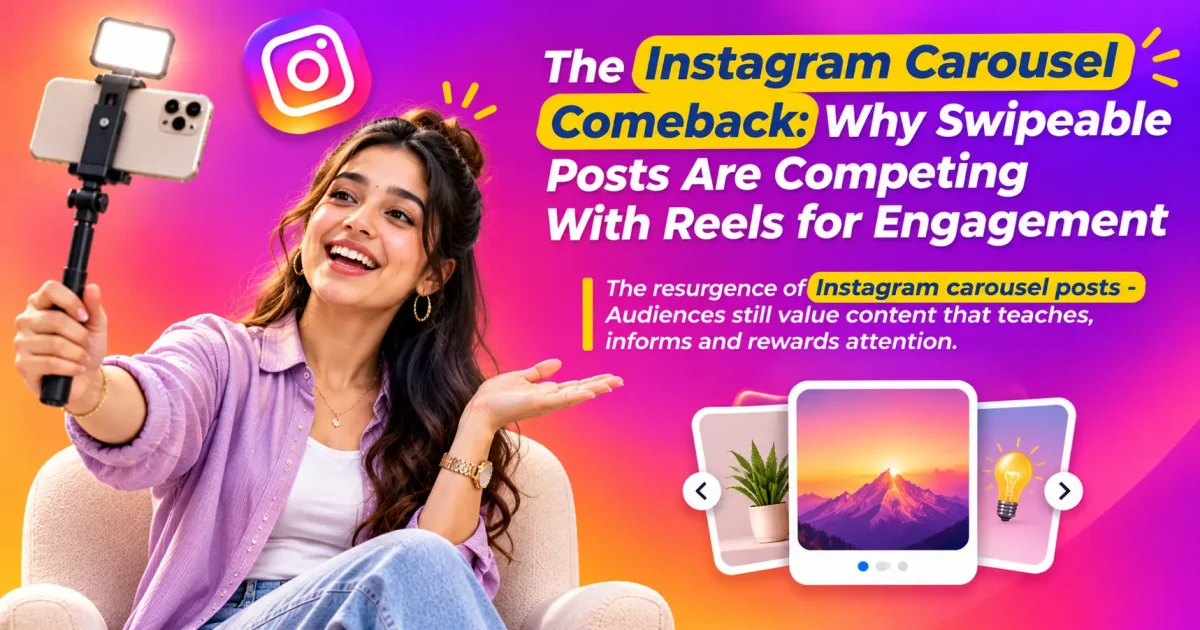
The resurgence of Instagram carousel posts reflects a broader reality about social media. Audiences still value content that teaches, informs and rewards attention.
Reels remain a powerful discovery mechanism. But carousels have proven they can compete for engagement by encouraging longer interactions, stronger save rates, and more meaningful shares.
For businesses, creators and marketers, the takeaway is clear. Swipeable posts are no longer secondary content. When planned thoughtfully, they can become some of the most effective assets in an Instagram content strategy.
FAQs
Are Instagram carousel posts better than Reels?
Reels may be the way to go if your objective is to get your message out there and have people discover you; however, Carousel Posts are likely to yield higher numbers of saves, shares, and educational interactions. Ultimately, the right type of post will depend upon what you want to accomplish with your content.
Why do Instagram carousel posts get more saves?
As well as being able to find the same content on a regular basis (such as frameworks, tutorials, checklists and industry trends), many carousels also provide an opportunity for users to “save” content that they may wish to look at again.
How many slides should an Instagram carousel contain?
There are no universal numbers. Your ideal length will depend upon the subject you’re presenting, however each of your slides should provide something of value to the presentation, and help to advance the story/lesson.
Should businesses stop creating Reels?
No, there is a difference between Reels and Instagram carousel posts. In general, an effective Instagram content strategy will utilize Reels to gain exposure and Carousels to build a relationship with your followers through educational opportunities.